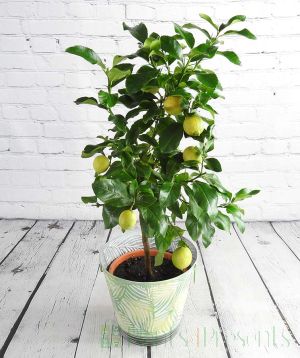
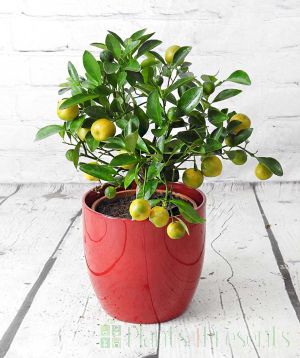
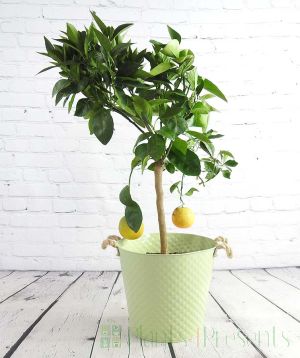
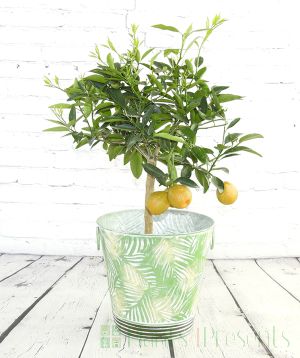
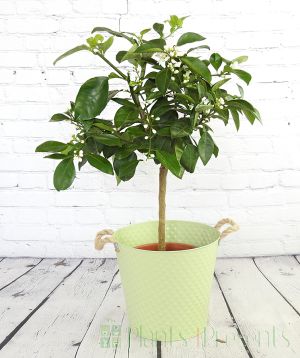
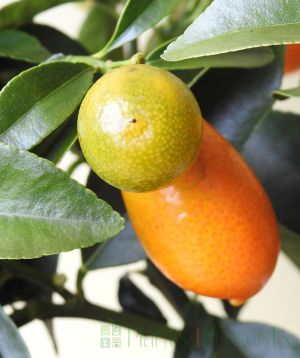
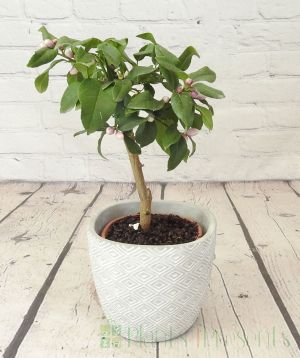
Dwarf Citrus Trees - choosing the right location
Citrus trees have been grown in the UK for hundreds of years and in the right spot
are easy and really rewarding plants.
They need plenty of sunlight and somewhere cool but not cold or frosty
In the UK that means they do need to be indoors in the winter to protect them from
frost.
In the summer they will be happiest outside on a sheltered patio but they will also
do well on a windowsill or in a bright room or conservatory.
Indoors try to keep your plant away from any radiators, underfloor heating or draughts
and if on a windowsill keep the leaves from touching the glass.
When can my tree go outside?
Calamondins, kumquats, Mexican limes, grapefruits and orange trees should all be
kept above 8C so can only go outside for the warmest months of the year.
Lemon trees and particularly the mature lemon trees can take cooler temperatures
right down to 1 or 2C and can go outside as soon as the night time temperature is
above freezing. (They will even survive a mild frost if you get caught out).
We always err on the side of caution when exposing plants to cold temperatures but
we have had many reports from the South West and London of Lemon trees doing well
outside when trained up walls or kept in pots on sheltered patios.
If and when you do move your plant outside do be aware that a sudden change in light
levels can cause 'sunburn'. To avoid this place your plant in a partially shaded
spot for a few days before moving into full sun or move it outside for a few hours
a day until it has adjusted to its new position. Too dramatic a change in light
level can lead to blanching of the leaves and some leaf loss but over time your
plant will recover and put on new growth.
Advice on Watering
Getting the watering right is crucial with citrus, the trick is to water only when
the soil is dry to the touch and then to water heavily from the top of the pot.
You should expect the amount of water your tree uses to change quite dramatically
from summer to winter and according to the weather.
How often you will need to water depends on: Air temperature, wind, location (light/dark
situation), the size of your plant in relation to its pot & the type of soil
Both underwatering and overwatering lead to leaf loss and can eventually kill your
plant.
Water at least 20% of the volume of the pot each time
so 200ml for a small calamondin in a 1L pot,
1L for a large lemon tree in a 5 litre pot.
When the surface of the soil dries out on top, remove the plastic pot from any pot
cover or basket and water the plant heavily until the water runs freely through
the soil and out of the holes in the bottom of the plastic pot. You might find it
easiest to do this in a sink or outside. Don’t f orget to throw the excess
water away and never let the pot sit in a pool of water.
As with most plants, citrus trees will absorb water better and more efficiently
if watered in the cool of the morning or evening rather than in the middle of the
day. Avoid splashing the leaves with water generally but particularly in the middle
of a sunny day.
Things that will affect how much water your plant needs
The higher the air temperature the more often your citrus plant should be watered,
because it will be evapotranspiring more. (or ‘breathing’ more)
The more wind or draft around your citrus plant the more water it will be using,
so it will need to be watered more often.
If your citrus plant is very big in relation to the size of the pot, then the amount
of water the pot will hold will not be enough to last it very long, so it will have
to be watered very frequently, and thus it is more likely to dry out. In general
the plant should be 2 times the height of the pot. If it is any bigger, the watering
becomes more difficult, and you should pot your plant into a bigger pot (see Repotting)
In a hot summer plants can need watering up to twice a day when in a small pot but
in the winter months this might drop right down to once every 2-3 weeks. It is therefore
important to be adapt your watering routine as the seasons change, be wary of underwatering
in the spring and overwatering in the autumn.
Citrus plants generally like a well-drained slightly acidic soil but they do grow
well in a variety of soils and more dense clay soils taking longer to drain water
through than bark based compost.
How do I know if my plant needs watering?
If the top few centimetres of the soil becomes dry to the touch, then it is time
to water your plant.
By observing the leaves, you can also tell if the plant needs water. If the leaves
start to droop, and wilt or loose their normal shade of green, as pictured below
then your plant is already showing the first signs of stress and should be watered
straight away.
After watering you plant, it is a good idea to lift it up and feel the weight of
it in your hand. You can then use that as a reference to judge whether the plant
needs watering in the future. After a while you will begin to be able to judge quite
accurately using this method.
Sudden and dramatic leaf loss is almost always due to underwatering so watch carefully
to catch your plant before this stage.
Symptoms of Overwatering
You should only water when the top of the soil is actually dry to the touch. Most
problems come not from watering too much but watering too often. If you consistently
overwater your plant, you will starve the roots of oxygen, and prevent them from
functioning properly. They can start dropping their leaves a few at a time at this
stage and if it continues can lead to root rot and eventually the death of the plant.
Advice on Humidity
Your citrus plant will survive happily indoors in centrally heated houses as long
as it is not too dry.
There is a lot of conflicting advice on misting vs not misting citrus trees. We
don't mist our trees in the nursery because it is normally fairly damp. We recommend
that you only mist your plants if they are in a very dry warm room or if you find
that the flowers are not setting fruits - otherwise you can increase the chance
of developing fungal diseases.
If you do have a particularly warm house and you do opt to wet the leaves of your
plant then it is best to do this either in the early morning or evening. In full
sun, water on the leaves of your plant can act as a magnifying glass and scorch
the foliage.
If your plant is outside it will adapt to the moister conditions and higher light
levels and will cope surprisingly well with wet conditions as long as the roots
are able to drain properly.
If it has been particularly hot and you are struggling to keep your plant well watered
you can splash the leaves in the evening when you are watering to cool it down and
raise the humidity but avoid doing this in the middle of the day when the sun can
scorch the leaves.
In extremely damp conditions for example if you overwinter your citrus in a greenhouse
or damp conservatory then it might be worth opening the windows in the middle of
the day.
Indoors and out spent flowers and dead fruits should be removed regularly to keep
the tree looking neat and to avoid fungal problems.
Advice on Feeding
When your Plants4Presents citrus tree arrives it will be well fertilized and should
not need any additional feed for the first 4 weeks. After 4 weeks it is a good idea
to start using the relevant citrus feed to keep your plant healthy.
Most plants including citrus trees benefit from additional Nitrogen, Phosphorus
and Potassium and general purpose and houseplant fertilizers contain these in various
ratios. Citrus trees however also need high levels of trace elements to keep them
including Iron, Calcium, Magnesium, Boron, Copper and Zinc to keep their leaves
and fruits healthy. General house plant feeds and tomato feeds etc contain Nitrogen,
Phosphorus and Potassium (NPK) but not all the required trace elements.
You can buy citrus feed (winter and summer feed) directly from our web site ...click here and we will
send your citrus feed to you by post or by phone on 0845 226 8026
Made to our own balanced formula this is what we use and recommend although of course
there are other options available at your local garden centre. If using these do
check that they have a summer and winter feed and that they contain all the trace
elements listed above.
Summer Citrus feed is used from April to October and contains more nitrogen to help
your plant put on fresh leaves and summer growth.
Winter Citrus Feed contains proportionately more Phosphorus and Potassium to help
your plant set and develop fruits.
However if you run out, either feed is better than none.
In addition to feeding regularly it is a good idea to top up your citrus tree compost
every spring and to repot it at least every other spring to give it a fresh boost
of nutrients.
When to feed?
Use fertilizer every other time you water your plants, in the growing period (when
the new shoots appear).
Outside the growing period, you will find that you are watering less often so every
other watering might be once ever 3 weeks which is fine. The fruits will develop
using the energy that has been stored up in the leaves and stems of the plants throughout
the growing period.
Advice on Repotting
When should you repot?
Citrus plants need to be periodically repotted to maintain a healthy plant - once
a year or once every 2 years for trees up to 6ft in height. For trees over 6ft you
can usually just top up the compost once a year and repot every 3 or 4 years.
Normally our trees will be sent in a suitable pot and you won’t need to think
about repotting f or at least six months. However if you are not sure, a good rule
of thumb is if your citrus plant is m ore than 2 and a half times the height of
the pot, then it is ready to be repotted.
Potting should ideally take place in the spring or early summer when the plant begins
to show signs that it is growing. Sometimes you might decide to repot your tree
in the summer because your plant has grown on a lot or because you are struggling
to keep up with the watering. However avoid potting up your plant in the late Autumn
or winter unless there is a good reason as it will not be growing and the roots
won’t move into the new soil.
What kind of soil?
The size of the new pot should be a large enough to allow a few centimetres of new
soil around the edge of the old rootball. It can be repotted in any well drained
mixture that is slightly acid. Probably the easiest solution is to buy a citrus
compost in a garden centre but you can also use top soil from the garden or 50:50
a mixture of top soil and ericaceous compost with a handful of sharp sand/grit/stones
for extra drainage. The ideal pH is 5 to 5.5.
Guidance on Repotting
Remove the old pot (Turn the plant upside down and hold it soil in with one hand
and pull the pot off with the other) If the roots are tightly knotted together,
gently pull them away from each other so that they will then be able to move out
into the new soil. Put a small amount of soil into the bottom of the new pot, lower
the plant into the pot and fill up around the edges, compacting the soil gently
with your fingers to make sure that there are no air gaps around the edge. Water
the plant th oroughly a few times, to make sure the soil is wet.
Older citrus plants can be repotted into the same pot if needed. In this case you
should cut away some of the root with a knife or secateurs (approximately a few
centimetres) and remove as much of the old soil with your fingers as possible before
repotting as above with fresh soil.
Problem Solving
The trickiest thing with citrus trees is getting the watering right. Overwatering
and underwatering are by far the most common cause of problems in citrus trees.
Overwatering is most common in the winter months or at the change
of the seasons from summer to autumn and results in steady leaf drop, root disease
and/or lightening of the leaves. Dropped leaves are normally leathery to the touch
but if you hold off and really dry the top of the soil out before watering again
you should see a full recovery.
Underwatering Not watering frequently enough or not watering thoroughly
enough to ensure that all the roots receive water can result in a sudden and dramatic
leaf drop. It is most common in the summer and in the spring when the amount of
water your plant needs suddenly increases. If you have slipped up and allowed your
plant to dry out completely don't despair we have seen even some of the most bare
and forlorn specimens come back to life with the right care.
Overfeeding Generally it is much more common to under rather than
other feed so as long as you are following the recommended dose you shouldn’t
need to worry about over feeding. In extreme cases using more than the recommended
rate of fertilizer can “burn” the roots, but this is rare.
Underfeeding Citrus trees are really quite greedy feeders and lack
of nutrients leads to pale, sickly looking leaves and also a susceptibility to pests.
When the plant doesn’t have enough nitrogen and/or iron the leaves typically
turn yellow and or mottled (view photo) Once this has happened you will need to
feed regularly for some time to get the new leaves to come through green and healthy.
Unfortunately once the leaves have got to this stage it is very difficult to return
them to a healthy green and most people only get a partial recovery on the old leaves.
Sometimes a plant can struggle to absorb particular elements because the water is
hard or the soil can become unbalanced over time leading to a lack of a particular
trace elements. Eg a lack of calcium leads to yellow or yellow brown tips to the
leaves
TOP TIP You can apply your citrus feed as a foliar feed to help get the nutrients
directly to the affected leaves. Simply make it up at half strength and water the
solution directly on to the leaves and new shoots. Be sure to do this in the morning
or evening so that bright sunlight does not scorch the leaves.
|