
Can a Houseplant Really Improve Your Sleep? We’re Putting it to the Test
If you’ve come across the headline, “A NASA study suggests that having a houseplant in the bedroom can improve deep sleep by up to 37%,” you may think this sounds too good to be true.
As a team that lives and breathes plants, we wholly believe in the power of greenery. But we’ll admit, this one got us talking in the Plants4Presents office. Better sleep, simply by adding a plant to your bedroom? If that were true, it would be a simple and natural way to improve wellbeing.
A decent night’s sleep is hugely important to us all, so we wanted to put this latest life hack to the test. After all, if plants really can help us unwind at the end of the day, it makes them an even more meaningful gift for new homeowners, new parents in need of rest, corporate gifts, or just someone in need of some TLC.
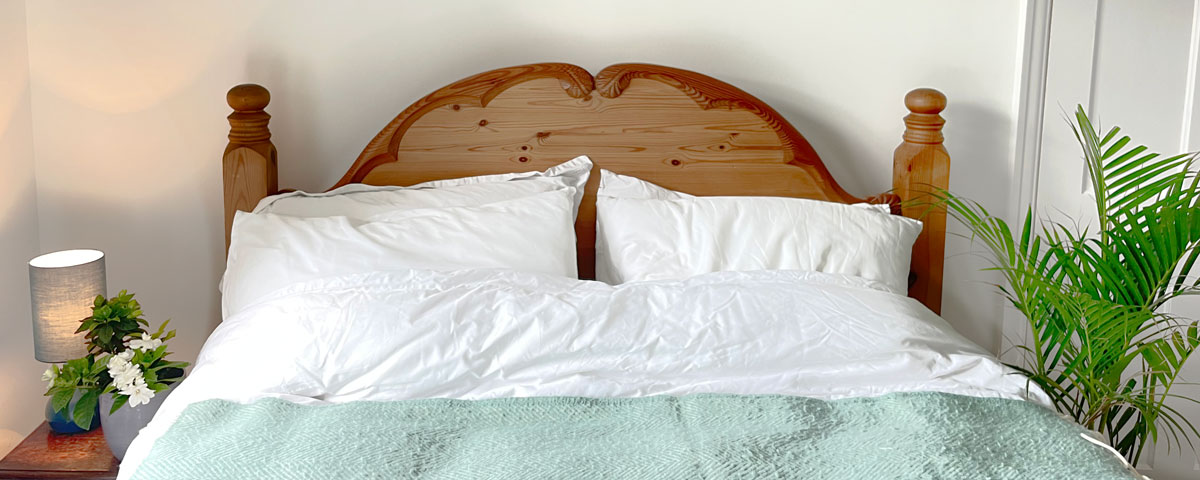
Plants make a space feel safe and relaxing as well as regulating humidity and filtering harmful toxins
What’s the story behind the study?
Articles claiming that a 2025 NASA linked study found significant improvements in deep sleep when a single houseplant was placed in the bedroom keep cropping up. In fact, these articles cite that sleep could be improved by 37%, with reasons ranging from improved air quality and humidity to the calming effect of having living greenery nearby.
It is suggested that the study was designed to isolate the effect of a single houseplant on sleep architecture. Tests were carried out on a sample of 50 participants over 14 nights, the first seven devoid of plants in the controlled sleep laboratory, and the next seven with a single Snake Plant (commonly known as Mother in Law’s Tongue in the UK) placed on a bedside table in the room. Sleep was monitored using polysomnography to record brain waves, blood oxygen levels, heart rate, and breathing.
The findings suggest that the presence of the single plant led to an average increase of 37% in the duration of slow wave sleep, or deep sleep to you and me. This phase is crucial for growth and repair, memory consolidation, and hormone regulation. The data also revealed that the time it takes to fall asleep reduced by an average of 22% and participants experienced 18% fewer night time awakenings.
To be transparent, there is no officially published or peer reviewed NASA paper that we can reference to confirm the “37% improvement” figure. But that doesn't mean that plants don’t help sleep, just that the science may not be as available as the headlines suggest.
Here’s what we do know
The original ground breaking 1989 NASA Clean Air Study provided a list of best air purifying plants, including Mother in Laws Tongue, Spider Plants, Peace Lilies, and Aloe Vera. Many of these are perfect a bedroom environment due to their low maintenance and tolerance for lower light conditions.
Even if the 37% figure turns out to be exaggerated, there’s no dark plant magic going on here. There are well known reasons why plants could have a positive impact on sleep.
It is widely known that green foliage plants, such as Spider Plants and Ferns, act as natural air purifiers. The process often referred to as phytoremediation, filters out harmful toxins and creates a healthier area for rest and recovery, especially in small rooms. Furthermore, the simple presence of greenery and the gentle act of tending to plants, links to our subconscious psychological urge to connect with the natural world. High cortisol stress levels are associated with insomnia and fragmented sleep and this subconscious urge, known as biophilia, induces a calming, stress reducing effect and promotes relaxation which is, of course, conducive to sleep.
As well as making a space feel safe and comforting, plants also regulate humidity, releasing water vapour, which can, for some people ease throat irritations and disturbed sleep caused by dry air.
This where our curiosity kicked in. Do plants in the bedroom actually help you sleep better?
Rather than dismissing the idea or accepting it blindly, we’ve decided to test it ourselves, especially as many of our plants are chosen as gifts for recovery and wellbeing.
Over the next month, the Plants4Presents team will be running our own informal experiment. Each of us will take home one houseplant from our Sussex nursery, place it in our bedroom, ideally at pillow height and within two meters of the bed. We’ll maintain our normal bedtime routines and track how we sleep and how we feel over the month.
We won’t be hooking ourselves up to equipment, trackers, or claiming any scientific breakthroughs but we will be paying close attention to things like how quickly we fall asleep, how often we wake during the night and how rested we feel in the morning. January and February can be hard going months, so we’ll reflect on our general mood and stress levels too.
Better sleep might not come with an exact percentage. We love the idea that a gifted plant can come with a little extra hope attached, so if a plant helps improve your wellbeing and makes you feel more at home, that’s a win in our book. We’ll report back in February on whether we noticed any real improvements and, if nothing else, we’ll all have greener bedrooms!
Want to try it with us?
If you’re curious, why not give it a go at home too? Choose a foliage houseplant, set it on a bedside table or stand level with your head in your bedroom, and see how it makes you feel over a few weeks. Keep us up to date with your progress using our contact us form.
Plants to choose for a great night’s sleep
For our test, we’re sticking to easy to care for houseplant favourites with broad leaves, including:
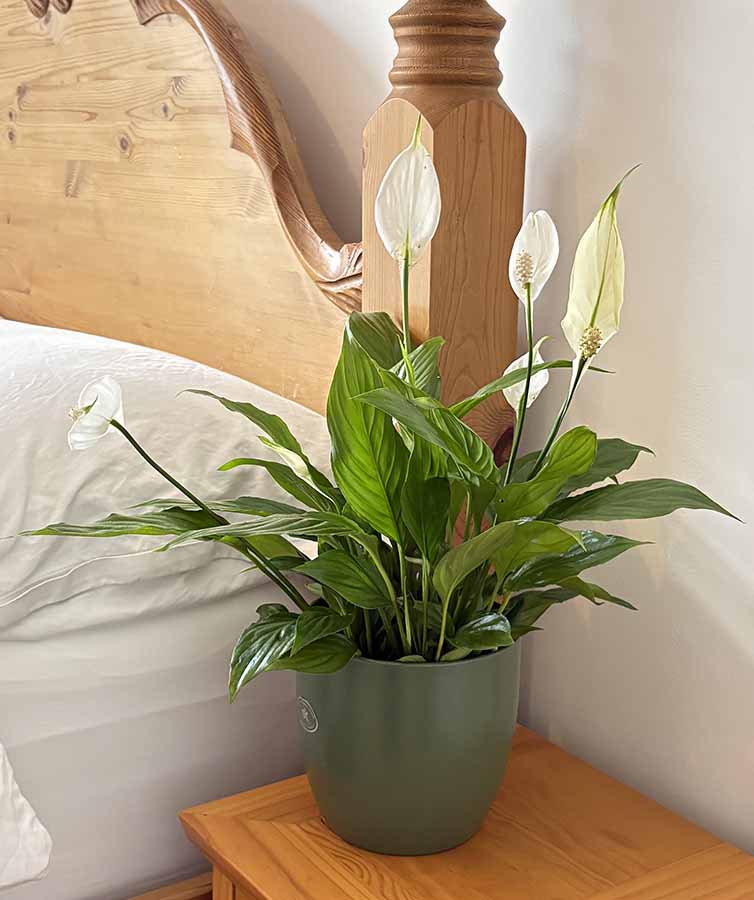
Peace Lilies
These elegant plants thrive in a range of light levels making them perfect for ambient bedrooms
Buy Now
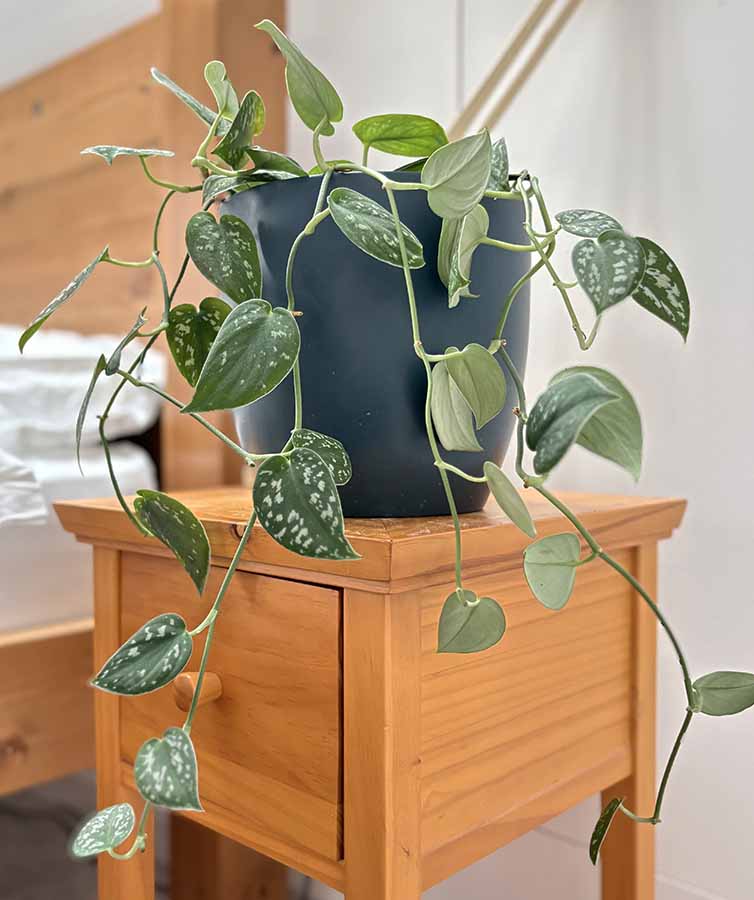
Satin Pothos
Trailing houseplants are bang on trend! They are also super easy to care for too
Read More
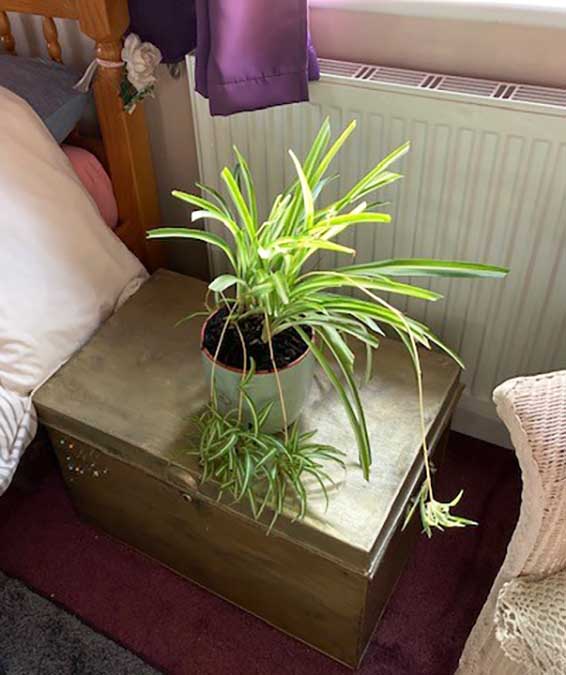
Spider Plants
Known for their air cleaning magic, Spider Plants are perfect for a space you spend up to 8 hours in a night!
Buy Now
All are low maintenance plants, happy in a range of light levels, and well suited to bedrooms.
